







The construction of two data centers in the Big Cedar Industrial area raises concern among Kirkwood Community College students and faculty, who worry the effects of the large data campuses will hurt local communities and the environment.
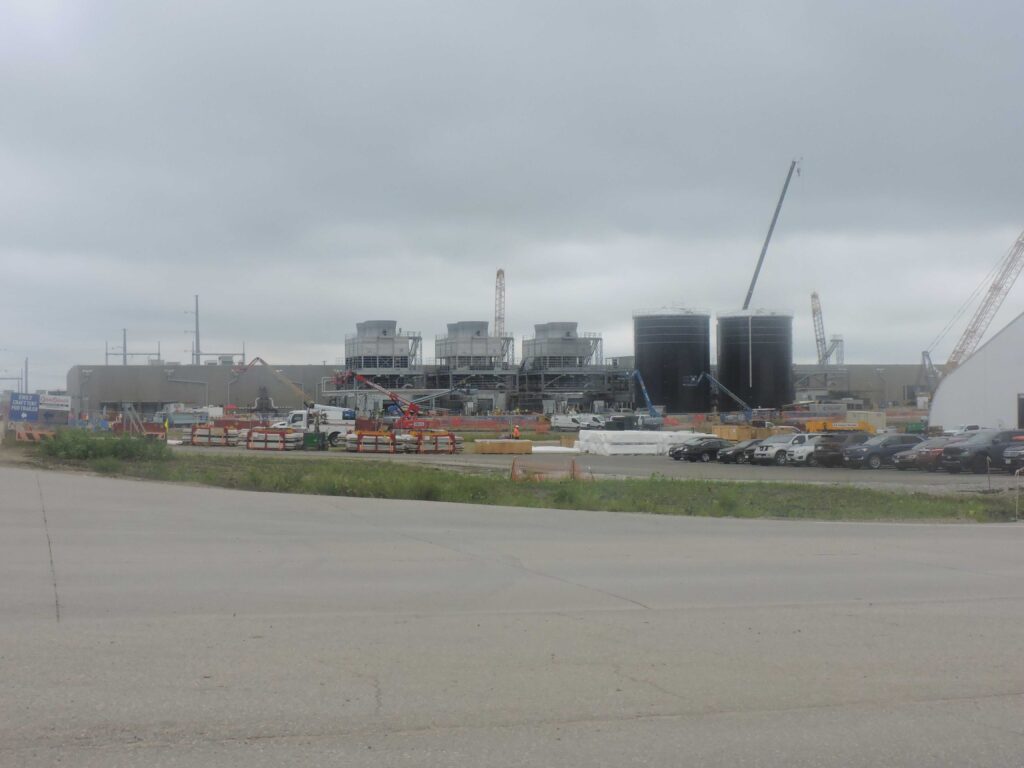
The $576 million Google data center and a second $750 million center owned by Blackrock subsidiary QTS are projected to benefit the local economy by creating jobs, generating property tax revenue and contributing to a community betterment fund as reported by Cedar Rapids Economic Development Services. But public opinion remains skeptical.
Korey Hall, associate professor of pre-engineering at Kirkwood, is an environmental engineer. Hall said her primary concern when it comes to data centers is their environmental impacts and what their presence means for local natural resources.
“Data centers have been around for a long time, but not in the capacity and size that we’re now seeing because of AI. Now they’re huge,” said Hall. “So in terms of the energy use, I mean, these things can use as much energy or water as small towns.”
The energy used by data centers is not only substantial, but it contributes to air pollution and emits greenhouse gases by using fossil fuels to meet high energy needs. “It’s furthering the reliance on fossil fuels because we don’t necessarily have the infrastructure or the capability to use renewables for everything,” Hall said.
Hall is also concerned that the size of these data centers will disrupt local environments and wildlife by reducing habitats and changing lifestyle patterns in animals, especially nocturnal and migrating ones, through noise and light pollution, which is also a nuisance to humans as well.
Kirkwood students are equally troubled by the environmental issues data centers entail, with many worrying about their water consumption.
Lizzy Patterson, nursing, said, “I just feel like it’s not a very good use of resources with how scarce water is right now. I just don’t think it’s very beneficial overall to our communities.”
She added, “Long-term, we’re struggling with water as a country. In Iowa it’s not horrible but we’re gonna start to see that get worse and worse and worse.”
Some students like Kylee Klepack, culinary arts and business, are particularly concerned that data centers will have more noticeable impacts when built in smaller communities like Cedar Rapids.
“I don’t think we need all the data centers just being put around everywhere, especially not in smaller towns,” said Klepack. “Maybe bigger cities, but not so much the small towns.”
Weighing against these concerns are the positive economic benefits that city leaders find incentivizing.
The benefits associated with the Google and QTS data centers include an estimated 3,000 new construction jobs until 2030, generating an estimated $423 million per year in wages paid to temporary construction workers of which $0.47 out of every one dollar paid is estimated to enter the local economy, according to Cedar Rapids Economic Development Services.
Categories: News