






The spring semester is off to a cold start, and the once-vibrant campus has given way to bare grass and negative wind chills. Still, green life thrives on the outer edges of the college. Inside the Horticulture building stands a 7,000-square-foot greenhouse that is home not only to plants but also students and staff.
Hannah Dunlap, general manager and professor, shared her contagious passion for how the space benefits Kirkwood and the surrounding community.
Dunlap was once a horticulture student herself in 2012 before returning to carry on the legacy of the instructors who taught her. Now, working alongside Professor Bob Smith, she helps create greenhouse experiences that continue to change students’ lives.
“This greenhouse has grown roots,” Dunlap said. She added it is difficult to see students go once they complete the program, but most of the time they leave for bigger and better things.
She explained that former students have gone on to work at the Chicago Botanic Garden, start their own businesses or continue family landscaping operations. Dunlap credits the greenhouse’s hands-on approach through student labs and experiments for much of that success.
When discussing her favorite aspects of the facility, Dunlap emphasized that the greenhouse’s impact extends far beyond the horticulture program. It supports parks and natural resources students by housing native plants, helps agriculture students test crop durability, supplies microgreens to The Class Act restaurant and previously sustained a floral career program.
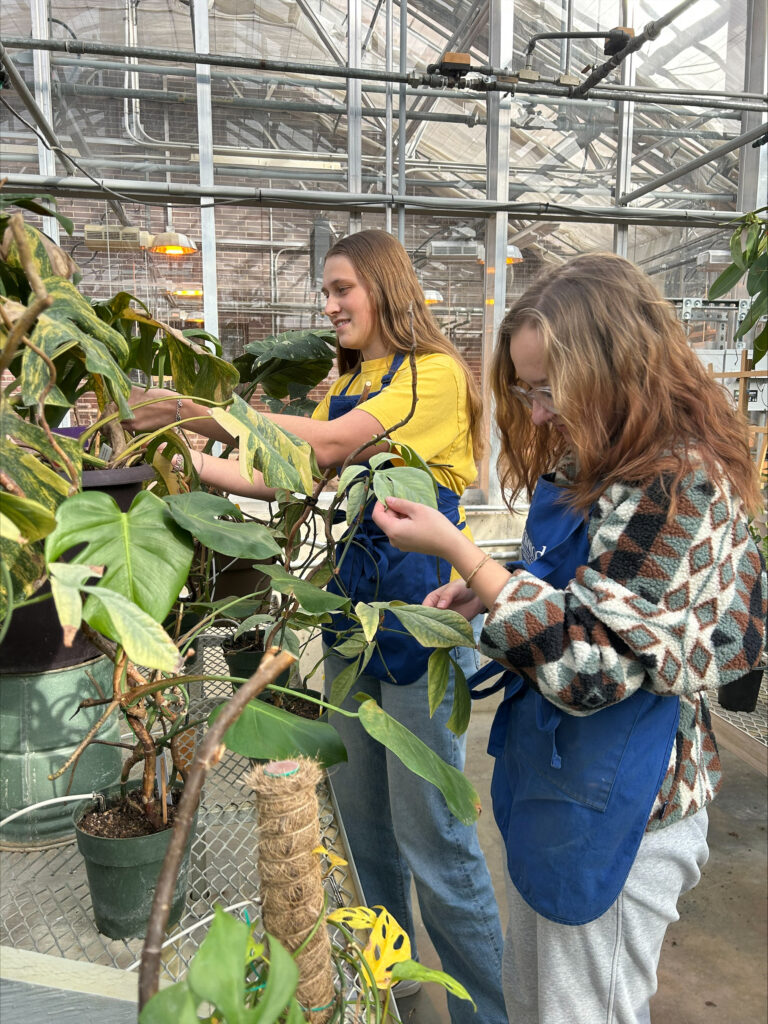
That former floral program space has since been transformed into what Dunlap describes as one of the most “living, breathing” rooms in the building: The houseplant room.
Dunlap noted the room offers students a safe place to experiment with their own plants and serves as a retreat for those who need a break from everyday stressors.
Parts of the greenhouse are also dedicated to community partnerships. One example is Feed Iowa First, a nonprofit that has used the greenhouse since 2021 to grow seeds and improve farming methods brought by international refugees. The greenhouse environment is more suitable for warm-climate plants than Iowa’s extended cold seasons.
“It’s called a community college for a reason,” Dunlap remarked.
The greenhouse’s impact has endured through challenges, including the 2020 derecho, cold damage and an ever-evolving horticulture program.
“She has shown resiliency over the years, from various productions to our program shifting and changing focus,” Dunlap said.
Looking ahead, Dunlap hopes to make system upgrades while continuing to expand advanced horticulture methods already in use. A portion of the greenhouse houses a hydroponics system that allows plants to grow without soil. Among the crops are plants uncommon in Iowa, including pomegranate and an avocado tree.
Another innovative feature is the aquaponics system, where tilapia swim in large blue tanks beneath a massive split-leaf philodendron. In this system, plants receive nutrients from the waste produced by the fish, creating a self-sustaining cycle.
For prospective horticulture students, Dunlap said the greenhouse offers hands-on experience and an open-dialogue approach that supports experimentation.
“You don’t have to know what you want to do,” Dunlap said. “You just have to know that you want to be outside, you want to put your hands in the dirt and you want something different every single day.”
Categories: News