







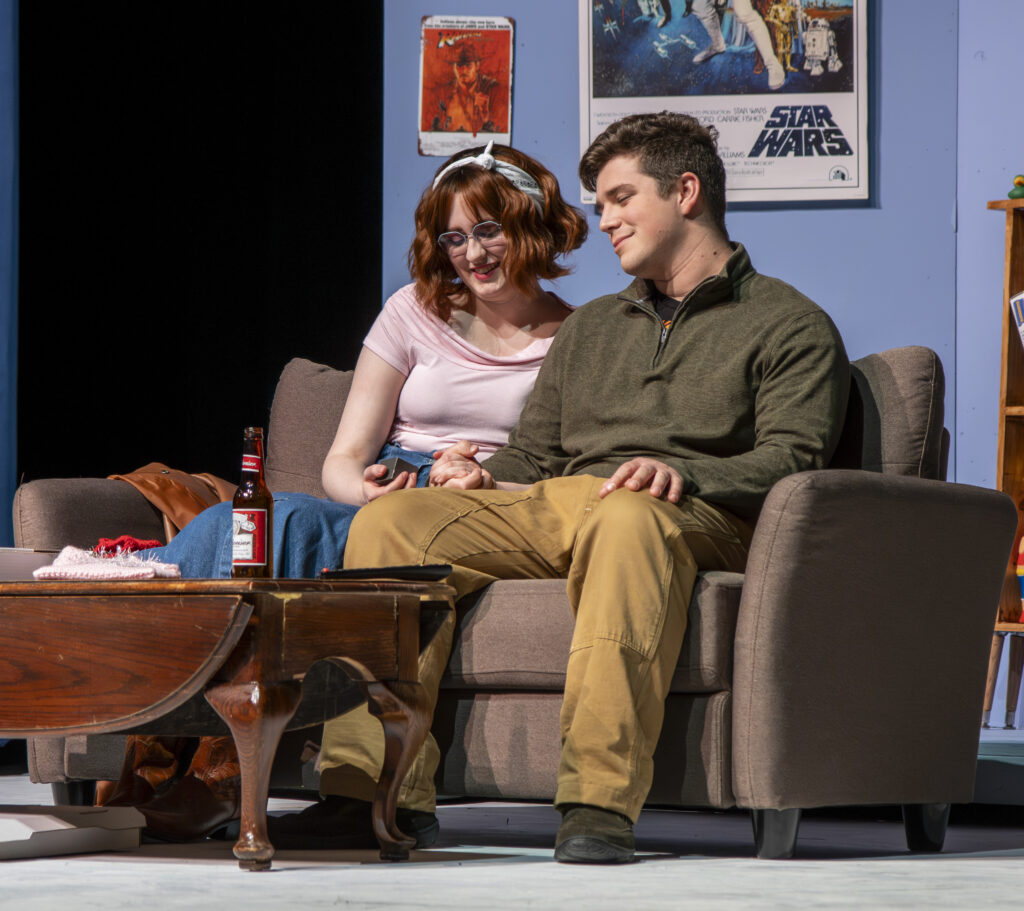
Love, loss and a touch of magic came together in Kirkwood Community College’s recent production of “Almost, Maine.” The vignette-style play written by John Cariani explores relationships through a series of interconnected stories set on a cold winter night.
Set in the fictional town of Almost, Maine, the play follows nine vignettes, each focusing on different characters navigating moments of love, connection, heartbreak and self-discovery. Though each story stands on its own, the shared setting and themes create a cohesive exploration of how love appears in everyday life.
Director Katie Colletta described the process as highly collaborative, emphasizing both student involvement and growth throughout rehearsals.
“We’ve got students who have been doing theater for years and years. We’ve got students who are just stepping into this art form for the first time, so it’s been great to watch everybody grow,” Colletta said. “If I were going sum it up in one word, I would say ‘growth’ is the word of the show.”
From design to stage management, the production emphasized student involvement across multiple roles. Mo O’Donnell, a student director and actor, contributed both onstage and behind the scenes, directing one of the vignettes while also helping with marketing and music.

O’Donnell also reflected on the emotional significance of the experience.
“It felt so fulfilling to see something I had the idea for and getting to pass it on to the cast and letting them embody it,” O’Donnell said. “This show and these people mean a lot to me, so getting to have my ideas included is a very nice feeling.”
The production emphasized a minimalist design approach, allowing the storytelling and performances to take center stage. Rather than building fully realized interiors, the focus was on evoking atmosphere through movement and color. Lead technician Marianna Coffey said the goal was to capture both the emotional and physical landscape of the show without overwhelming the stage.
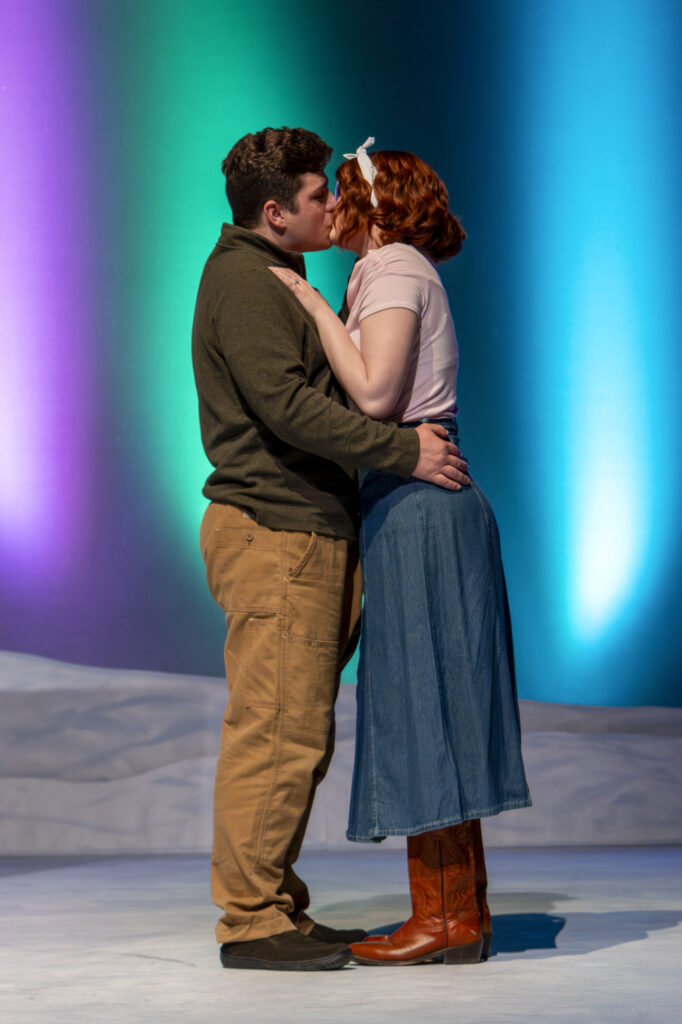
“I wanted to establish a place and establish the coldness and be able to give the vastness of seeing the Northern Lights without going overboard with sets and props,” Coffey said.
The set incorporated cool-toned colors inspired by the northern lights and avoided traditional structural elements like walls or detailed trim. The stage floor was painted using mops and layered colors to create the illusion of ice and snow, reinforcing the show’s winter atmosphere.

Costume design followed a similarly intentional approach, balancing realism with thematic cohesion. Drawing from actor input, designers balanced visual cohesion with practicality, incorporating layered winter clothing that fit the setting while keeping performers comfortable under stage lighting. Costume director Bre Kenney and student designer Justeen Schoner worked together on the production, with Schoner contributing crocheted pieces and designing costumes for multiple scenes.
“A lot of my hours outside of being on campus went into crocheting things from start to finish from scratch,” Schoner said.
Schoner also noted that the rehearsal process differed from more traditional productions due to the play’s structure.
“It’s been a little different than other rehearsal processes that I’ve done, just because it’s very segmented,” they said. “We weren’t necessarily called every night multiple nights in a row until the past couple of weeks because we would just be called when we were working on our scenes with our scene partners. So that was nice but also a little strange because I feel like as a whole cast, we didn’t really get to start the bonding that you normally would in a typical process.”
That segmented structure was a common theme among cast and crew. Because each vignette features different characters and storylines, rehearsals often focused on one scene at a time. Actor Andrew Forcier said the format made the experience feel like working on multiple shows at once.
“It’s been different than other plays I’ve been in because it’s a vignette play, so it’s like nine different plays in one,” Forcier said. “Since I’m in two scenes, it’s like I’m doing two different shows, so that has been very interesting to navigate.”
Behind the scenes, stage manager Lucas Fritz helped coordinate communication across the production, attending rehearsals and ensuring that cast and crew stay organized throughout the process.
“I’m basically the communications between pretty much all positions,” Fritz said. “I go to every single rehearsal. I’m the one that takes all the notes for if we have any ideas for props or sets, and then after each rehearsal, I send out an email to pretty much all the designers, all the actors, the directors, just kind of catching up with what they missed if they were gone or kind of making it so they don’t have to go to every single rehearsal.”
Through its blend of minimalist design, collaborative production and emotionally grounded storytelling, Kirkwood’s “Almost, Maine” highlights the complexity of human connection, showing that even in an “almost” place, the experiences of love and loss feel entirely real.

Categories: Art & Life