






Living in Iowa can come with its own interesting set of challenges because of the harvest season. During the harvest, there are more farm vehicles on the road, combines working the fields and semitrucks carrying grain to and from farms around the state.
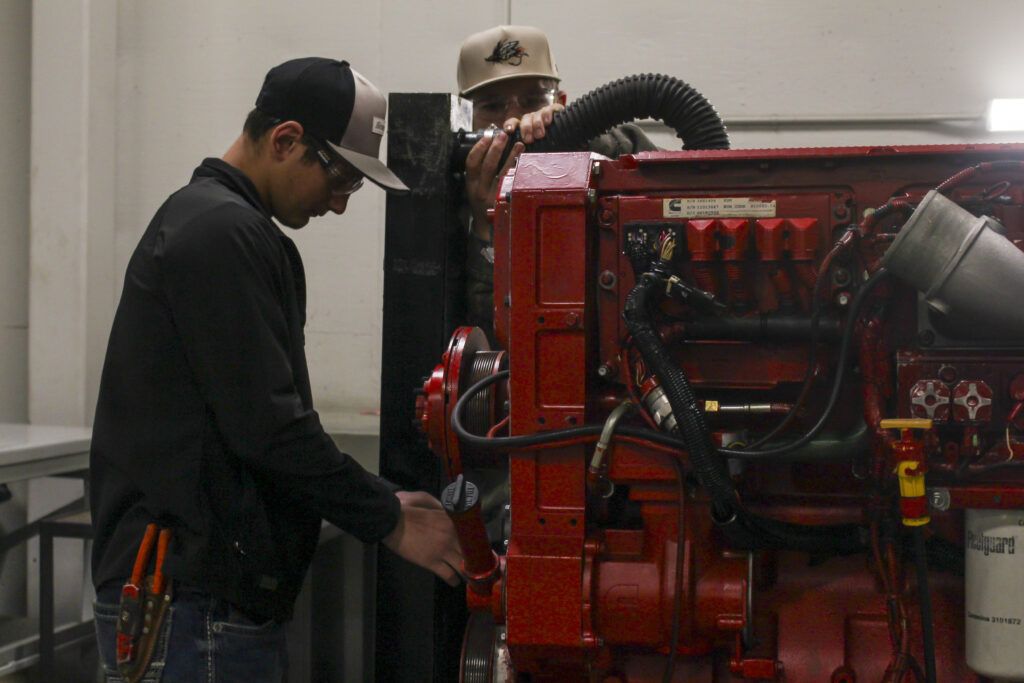
At Kirkwood Community College, students learn about the harvest season with labs for both diesel technologies and agricultural science.
Doug Carlson, diesel technologies professor, teaches students about the equipment used in harvest, fixing equipment and preparing for a successful harvest.
Carlson also teaches students about the harvest season to prepare them for the world after Kirkwood.
Many co-ops and mechanics depend on a good harvest for business, so the training that students get at Kirkwood helps to make the harvest as smooth as possible for farmers.
“Farmers count on a good harvest to support themselves and family, just like any other job, so for us to be able to help them out is a rewarding feeling of accomplishment,” Carlson said.
For construction major Cade Volesky, harvest is more than an Iowa livelihood. He has family and experience working during the harvest season, which gives him an interesting perspective on the season.
“Harvest is important because it’s when the crop is collected, and that is what makes money and feeds the world,” Volesky said.
Harvest season comes with its own set of challenges as well, such as machinery malfunctions, Midwestern weather changes such as heavy rain and early temperature drops, and poor growth conditions earlier in the year.
“Harvesting is very chaotic on a farm with a lot of moving parts; it’s a battle against the weather and time,” Volesky said.
Kirkwood Community College has nearly 500 acres of farmland on the main campus.
The campus has different facilities for different classes and programs in the field, including a beef complex where students learn livestock management, a swine education center, 6,000 square feet of greenhouse space, outdoor learning labs and even native prairie land.
Categories: Feature