







Many students walk across Kirkwood’s campus every day without realizing that many of the machines, tools and products used in everyday life begin as digital designs.
At Kirkwood Community College, the Computer-Aided Design/Mechanical Engineering Technology program prepares students to create detailed digital models and technical drawings before products are physically built.
According to Kristie McKibben, an instructor in the CAD/MET program, students learn computer design, technical drawing and engineering design skills that are widely used in industry.
“We’re in the manufacturing sector,” McKibben said, “so, we create the CAD and the drawings for things to be manufactured. Students learn computer design, technical drawings, and engineering design skills that go along with that.”
In simple terms, CAD is the stage where ideas begin to take shape before becoming real products. These digital designs guide the production of parts, machines, and equipment used across industries.
The CAD/MET program is designed as a two-year degree that prepares students directly for the workforce, although many choose to transfer to four-year engineering programs.
The program offers flexibility depending on students’ career goals.
McKibben said in the second year of the program, students can choose between two pathways. One is a calculus-based track for students planning to transfer into engineering programs, and the other is a non-calculus track for students who want to enter industry right after graduation.
She said graduates often pursue careers as CAD designers, drafters, CAD operators or engineering technicians working in manufacturing environments.
Students gain hands-on experience using industry-standard software such as SolidWorks, Auto CAD and Creo.
They also have opportunities to earn industry-recognized certifications, which help demonstrate their skills to future employers.
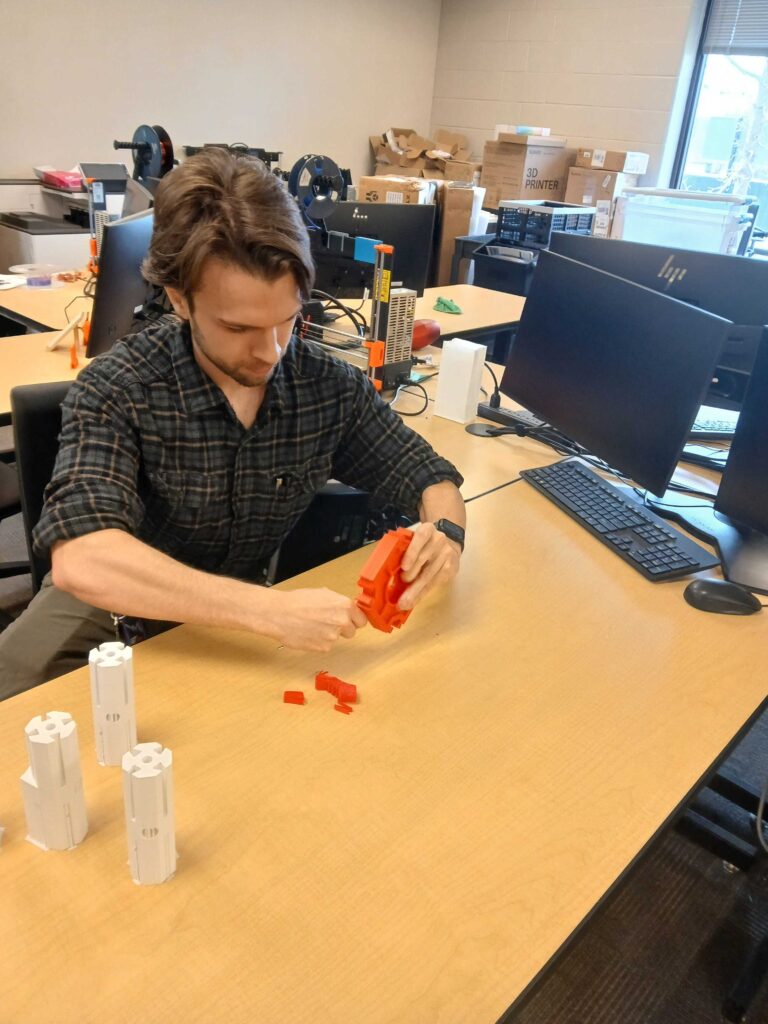
Hands-on learning is central to the program. Students participate in design projects where they take ideas from concept to prototype.
“We do a real-world design class called Design Projects where students take an idea and implement it,” McKibben said. “They take it from design all the way to prototyping.”
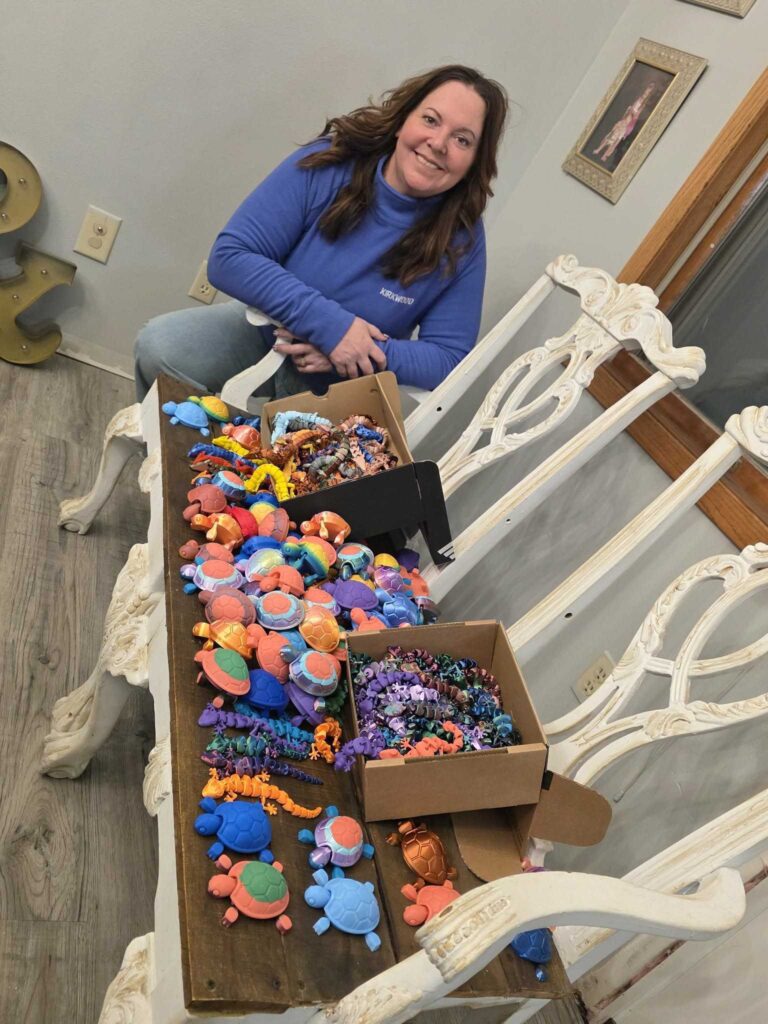
Another key part of the program is reverse engineering. Students analyze existing products, determine how they were designed and manufactured, recreate them using CAD software and identify possible improvements. Students are also introduced to emerging technologies such as 3D printing, where digital designs are transformed into physical objects.
For CAD student Jackson Webber, the program began with curiosity about how machines work. “I’ve always had a fascination with understanding mechanisms, cars and machines,” Webber said. “I worked at a factory and started thinking, instead of fixing them, maybe I want to design them.”
Webber plans to continue his education in engineering after completing the program.
He said believes the experience has taught him valuable skills beyond technical knowledge. “Project planning is a big skill that transfers to any job,” Webber said.
“Working with others and communicating in a group is important for this job and really for any job.” McKibben said she encourages students interested in engineering or design careers to start early and stay committed to learning.
The CAD/MET program provides students with both technical skills and real-world experience, preparing them for careers in a growing and essential field.
Categories: Campus News, News