




At Kirkwood Community College, parks and natural resources students share a passion for conserving Iowa’s ecosystems. Land management of wetlands and tall grass prairies is a major part of the program’s curriculum as well as studying the native plants and animals that inhabit them.
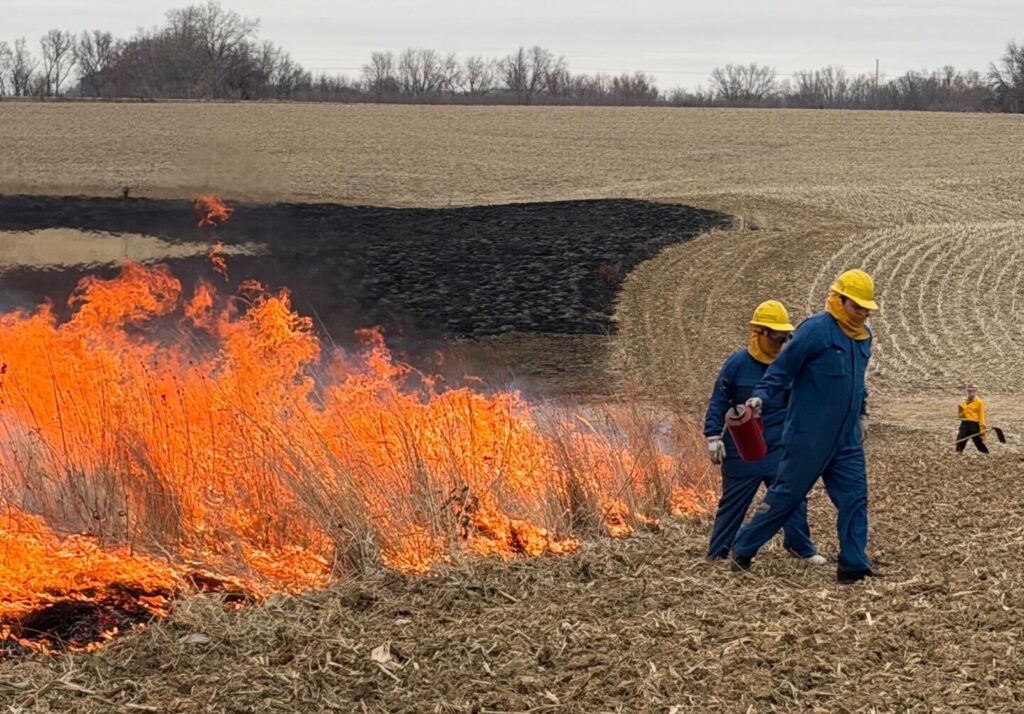
One way that students care for the prairies they study is by setting them on fire. While it may seem counterintuitive, prescribed burning is a centuries-old conservation practice rooted in Native American land management. With .1% of Iowa’s original prairies remaining, restoration efforts are vital, and prescribed fire can assist.
This is now taught as a hands-on skill by staff like parks and natural resources lab technician Clarah Buhman and instructor Richard Dunbar.
In this Q&A, Buhman explains the role of fire in prairie restoration and why it remains essential to conservation today.
Introduce yourself. What is your role, and how long have you been at Kirkwood? Why parks and natural resources?
I am Clarah Buhman, and I have been with Kirkwood for seven months as the parks and natural resources lab technician, helping manage Kirkwood’s natural areas on and off campus. I was a student in the parks program seven years ago and since then have worked as a naturalist, wilderness guide and zoo educator. I enjoy caring for the land to then see what animals will call that ecosystem home.
Can you describe what land parks students help manage and what hands-on experience they get?
Students at Kirkwood in the parks program manage 675 acres off campus at the Atherton Wetland and around 50 acres on campus. Most of this land is prairie, but we also have forested areas and an orchard the students prune and fell trees. To properly maintain the land in addition to fire usage, students will also drive tractors and skid steers to mow, plant additional prairie and practice proper chemical usage.
What are some benefits to getting students involved in prairie burns?
This is a necessary land management practice for the students to learn. Fire has been used for thousands of years to manage Iowa’s prairies. This skill set will be used in many areas and career paths in parks and natural resources.
For people who may not understand why you use prescribed fire, why is it necessary for prairie health?
Doing prescribed fire allows the prairie to maintain a healthy ecosystem. Prairies have adapted their seeds and regrowth to using fire. The woody species, or invasive species, have not, so the fire will help cut back and eliminate invasive species and reduce the amount of chemicals we would need to manage them.
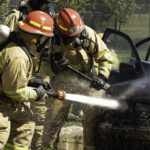
The parks and natural resources program participates in several burns per year alongside other parks maintenance activities. Students learn forestry, equipment operations and identification skills that they practice on Kirkwood property and for local landowners.
Students recently completed a prescribed burn on campus in the fall that can be distinctly seen by a large area of blackened soil by the Horticulture Building. Now that spring is around the corner, new plant growth has started to peek through, serving a reminder that life grows back even after the flames have passed.
By summer, tall grasses and flowers will attract beneficial insects, birds and mammals. That same prairie will even become a waystation for migrating monarch butterflies in the fall. After another two to three years, the fire cycle will begin again.
Next time smoke is seen from the prairies on campus, think of Kirkwood students who are making a difference in Iowa tallgrass prairie conservation. The parks and natural resources program continues to ignite those flames of change.
Categories: News